RWA Module
Info
RWA turns real-world assets into “digital” ones - so they can be owned, accounted for, and managed as conveniently as crypto, but with documentation and transparent rules. This is one of the fastest-growing bridges between traditional finance and blockchain.
What RWA Is
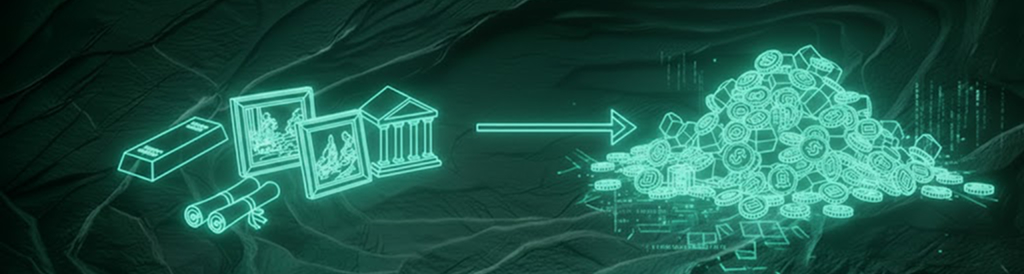
RWA is the tokenization of real-world assets: a token appears on the blockchain that represents a right or a share in a “real” asset outside the blockchain.
In simple terms, RWA is when the “real world” (assets, rights, cash flows) receives a digital form that can be stored in a wallet, transferred, used in services, and accounted for within a single portfolio - like regular tokens, but with a clear legal and documentary foundation.
The core idea is not to “turn an asset into crypto”, but to make ownership and operations with it as fast and convenient as in blockchain systems: clear statuses, automation, transparent history, and controlled access rules.
Note
A token is not “magic”, but a digital representation of rights: it is always backed by real ownership infrastructure, custody, and supporting documentation.
Why the Market Needs RWA and Why It Is Becoming Massive
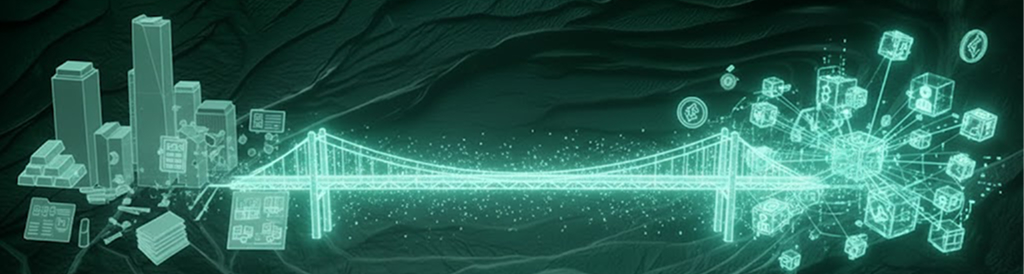
RWA connects two worlds: the enormous volume of traditional assets and the speed and programmability of blockchain, creating a new layer of financial infrastructure.
The traditional asset market is enormous, but its “digital mechanics” have historically been slow and fragmented: different intermediaries, separate dashboards, disparate document workflows, and lengthy approvals. RWA takes the strongest elements from blockchain - 24/7 continuity, unified statuses, automation via Smart_contract - and brings them into the world of real assets.
Why this can become a “trillion-dollar” market: tokenization is not a single product, but a way to assemble assets into new forms and give them a digital life. As a result, analyst estimates vary in range, but align on the core point - the sector has already moved from “pilot experiments” into a scaling phase.
- Conservative trajectory: “several trillion” by the 2030 horizon.
- Aggressive trajectory: “tens of trillions” by the 2030 horizon.
- Even today, the public on-chain RWA layer is measured in tens of billions and continues to grow alongside infrastructure.
Warning
Important: RWA is not a “hype market”, but an infrastructural evolution. Growth speed depends on jurisdictions, access rules, and provider quality, which is why the module is built with controlled onboarding conditions.
Why DARCA Needs This Module
RWA turns DARCA into a platform not only for crypto operations, but also for working with “traditional” assets within a single experience: portfolio, documents, statuses, and transparent rules.
DARCA wins where the market suffers from fragmentation: when users must keep funds across different systems and then manually “stitch” them together mentally and operationally. RWA turns the product into a unified financial layer: assets live side by side, while access rules, reporting, and support remain consistent.
The modular approach is critical here: RWA is a vertical with its own requirements for access, documentation, and risk, which is why it must be connected as a module, preserving the stability of the Core and avoiding overload of the base product.
Tip
RWA is a “second universe of money” within DARCA: not a separate application, but an extension that uses the same profile, the same statuses, the same documents, and the same level of transparency.

How the Platform Monetizes This
RWA monetization is built on a clear infrastructure-driven economy: access, volume, asset servicing, and documentary transparency.
- Fees for entry and exit operations (token issuance and redemption).
- Margin or spread on conversions (where applicable).
- Asset-under-management servicing fees (AUM model).
- Paid access via subscription tiers (rights, limits, terms, priority).
- Partner revenue-share models with infrastructure providers (custody, issuance, audit, reporting).
Example
RWA economics resemble “investment infrastructure”: value is created not by promises, but by the ability to buy an asset, hold it, service it, confirm it with documents, and manage it as conveniently as a digital token.
RWA T-Bills
RWA T-Bills are a “USD anchor” inside DARCA: tokenized access to short-term Treasury_bill instruments through a regulated structure, with clear liquidity, documentation, and unified Core statuses.
RWA T-Bills serve as a bridge between crypto speed and the familiar logic of traditional markets: the user gains a tool for value preservation and liquidity management without leaving the application. This reduces exposure to volatility, strengthens trust in the product, and creates a “middle layer” between a crypto wallet and a full-scale financial platform.
Info
Availability depends on region, KYC status, and compliance rules. We do not promise returns: the product describes mechanics, risks, and the rules for calculating outcomes.
What the User Sees
RWA T-Bills appear in the interface as a separate portfolio position: price, volume, status, event history, and documents. A key difference is result transparency before confirmation at the moment the user makes a decision.
- Purchase: source of funds (fiat / crypto conversion) → outcome preview → confirmation → execution status.
- Holding: unified history, events, documents, reporting, notifications.
- Redemption: direction selection (fiat / crypto rail) → outcome preview → confirmation → execution status.
Tip
Before confirming a purchase or redemption, the final outcome is always shown: what will be debited, fees, and what will be received in fiat or the asset - with no surprises. This principle does not apply to card payments: a card cannot request additional confirmation on top of the payment.
How Tokens Appear and Disappear in DARCA
We use a model where the underlying assets are held in a separate, ring-fenced structure, while the user receives a tokenized representation of the position within the product.
Mint = issuance of tokens when the user enters the product.
Redeem = redemption of tokens when the user exits the product.
Warning
The core principle of trust: assets must be legally and operationally segregated, and accounting must be verifiable and observable.
┌────────────────────────────── USER ────────────────────────────────┐
│            Buy / Hold / Redeem (Portfolio • Docs • Status)         │
└────────────────────────────────────────────────────────────────────┘
                          │
                          ▼
┌──────────────────────── DARCA APP ─────────────────────────────────┐
│ Access Rules (Region/KYC) • UX • Timeline • Notifications • Support│
└────────────────────────────────────────────────────────────────────┘
                          │
                          ▼
┌──────────────────────── RWA ENGINE ────────────────────────────────┐
│ Mint/Redeem • Pricing (NAV) • Limits • Audit Trail • Reporting     │
└────────────────────────────────────────────────────────────────────┘
                          │
                          ▼
┌─────────────── ISSUER / STRUCTURE (Ring-fenced) ───────────────────┐
│ Holds assets • Liquidity buffer • Policy & Controls • Reconcile    │
└────────────────────────────────────────────────────────────────────┘
                          │
                          ▼
┌────────────────────────── CUSTODY & EXECUTION ─────────────────────┐
│ Custodian/Broker • Settlement • Statements • Independent records   │
└────────────────────────────────────────────────────────────────────┘
                          │
                          ▼
┌──────────────────────────── BASE ASSET ────────────────────────────┐
│ Short-term US Treasury Bills • Maturity ladder • Roll-over         │
└────────────────────────────────────────────────────────────────────┘
Pricing and Outcome Mechanics
The price of RWA T-Bills inside DARCA is based on a clear metric: NAV (Net_asset_value) and the product rules (fees, execution windows, limits).
- The user sees the position price and value changes as the final result.
- Fees are not hidden in the interface: the final outcome is shown before confirmation.
- A complete audit trail (Audit_trail) is preserved for reporting: event → status → document.
Example
Entry at $1,000 → the user receives position tokens. The position value then changes according to NAV rules (net of fees and costs). Upon exit, the user receives the result via the selected rail (fiat or crypto).
Liquidity: “how fast can I exit”
Liquidity is where trust most often breaks down in tokenization markets. In DARCA, we define the rules upfront and make them visible before confirmation.
- Liquidity buffer: fast redemptions for small volumes without waiting for asset sales or rollovers.
- Netting: offsetting inflows and outflows, reducing costs and accelerating the cycle.
- Execution windows (if required): clearly defined timelines, statuses, and forecasts in advance.
Note
Every operation always follows a single lifecycle of statuses: created → processing → completed / rejected (with reason). This is the same predictability standard that applies across all Core flows.
Risks and How We Manage Them
RWA T-Bills are a financial product, and mistakes here are more costly than any “feature”. That is why risk management is part of the design, not an afterthought.
-
Legal and regulatory risk
- Geofencing, jurisdiction-based restrictions, KYC levels, risk profiles.
- Risk disclosure documents, product rules, audit verifiability.
-
Operational risk (accounting, execution, procedural errors)
- Separation of roles and access, change control, logging.
- Reconciliation, reporting, independent statements from custodians/brokers.
-
Counterparty and custody risk
- Working with trusted infrastructure providers, SLA enforcement, quality control.
- Asset segregation and procedural access management.
-
Liquidity risk
- Liquidity buffers, limits on instant exits, transparent execution windows.
-
Reputation risk
- No “return promises”, only mechanics and documentation.
- Any disputed event has a status, a reason, and a clear resolution path through support.
Danger
One of the core principles: if a rule cannot be explained to the user in a single sentence and confirmed by documentation, it should not be part of a mass-market product.
How DARCA Earns on RWA T-Bills
Monetization in this module must be “quiet”: it should not undermine trust or turn the product into aggressive marketing.
- Transaction fees: entry and exit with transparent outcome previews.
- Service fees for maintaining the structure: accounting, reporting, control, infrastructure.
- Premium terms via subscriptions: limits, faster restriction lifting, extended reports, priority support (subscriptions apply to the Core and modules).
- Liquidity retention within the ecosystem: increased LTV because capital does not “leave the system” between scenarios.
Tip
This is a “second layer of trust” module: after it, DARCA is perceived not as a wallet, but as a financial system where money can both work and remain liquid.
Integration with the Core: Unified Statuses, Documents, and Support
RWA T-Bills do not exist in isolation - they leverage the Core foundational layers.
- Event and status notifications (push / email / messengers based on settings).
- Documents, statements, and reports (including exports for tax scenarios where applicable).
- “Action-first” support: explanation plus a button that leads directly to the required screen or action.
Example
“I want to redeem my position” → support does not send a 10-step instruction, but provides a button “Open RWA T-Bills redemption” and pre-fills the context (amount, asset, regional availability).

RWA Metals
RWA Metals provide tokenized access to physical gold and silver within DARCA: real backing, transparent pricing, documentation, and predictable liquidity under clear product rules.
RWA Metals create a second “anchor of trust” after RWA T-Bills: defensive assets that are historically familiar to the mass market, yet require mature infrastructure - custody, reconciliation, reporting, and strict operational control. In DARCA, metals become part of a unified portfolio: buying, holding, and redeeming a position is as simple as with a crypto asset, but with bank-grade transparency and documentation.
Info
We launch Gold and Silver as the first metals because they are the most recognizable and liquid defensive assets. Availability depends on region, KYC status, and compliance rules.
What the User Sees
RWA Metals are displayed in the portfolio as separate positions with a clear meaning: volume, value, history, documents, and operational statuses. A key principle is outcome transparency before confirmation.
- Purchase: source of funds (fiat / crypto conversion) → outcome preview → confirmation → execution status.
- Holding: position details, documents, events, reporting, notifications.
- Redemption: payout to fiat or crypto under product rules → outcome preview → confirmation → execution status.
Tip
Before confirming an operation, the user always sees the final outcome: how much will be debited, what weight or volume will be received, and which fees apply - with no hidden conditions.
How Tokens Appear and Disappear (Diagram 2)
We use a model where the physical metal is held in a separate, ring-fenced structure, while tokens represent a right or share in a collateralized pool that is accounted for and independently verified.
Mint = issuance of tokens when a position is purchased.
Redeem = redemption of tokens when exiting a position.
Warning
Reputation matters more than margin: collateral must be verifiable, and accounting must be reconcilable with independent documents from the custodian.
┌────────────────────────────── USER ───────────────────────────────┐
│            Buy / Hold / Redeem (Portfolio • Docs • Status)        │
└───────────────────────────────────────────────────────────────────┘
                          │
                          ▼
┌──────────────────────── DARCA APP ─────────────────────────────────┐
│ Access Rules (Region/KYC) • UX • Timeline • Notifications • Support│
└────────────────────────────────────────────────────────────────────┘
                          │
                          ▼
┌───────────────────────── RWA ENGINE ───────────────────────────────┐
│ Mint/Redeem • Pricing • Limits • Audit Trail • Reporting           │
└────────────────────────────────────────────────────────────────────┘
                          │
                          ▼
┌─────────────── ISSUER / STRUCTURE (Ring-fenced) ───────────────────┐
│ Holds metal via custody • Liquidity buffer • Controls • Reconcile  │
└────────────────────────────────────────────────────────────────────┘
                          │
                          ▼
┌──────────────────────────── VAULT / CUSTODY ───────────────────────┐
│ Physical storage • Insurance (where applicable) • Statements       │
└────────────────────────────────────────────────────────────────────┘
                          │
                          ▼
┌──────────────────────────── METAL POOL ────────────────────────────┐
│ Gold & Silver • Verified inventory • Allocated accounting          │
└────────────────────────────────────────────────────────────────────┘
Security and Trust: Why This Is “Real Gold”
In DARCA, metals must not look like “just a gold price”. This is a product where trust is built on collateral that can be confirmed with documents.
- The baseline standard is the allocated approach: metal is accounted for as verifiable inventory, and tokens represent a share or weight within a collateralized pool.
- Regular independent reconciliations and reporting: the user sees confirmations in documents.
- A full audit trail (Audit_trail) for events: issuance, redemption, fees, statuses.
Note
If a rule cannot be confirmed by a document, it should not be part of a mass-market product.
Pricing and Execution: No Disputes, No Surprises
Pricing in RWA Metals must be predictable, otherwise any spread is perceived as deception. Therefore:
- The price source and execution rule are fixed in advance (and visible in the preview).
- Fees and spreads are shown before confirming the operation.
- If the market is closed or liquidity differs by time window, the user sees a marker and the execution rules.
Example
“You pay” → “You receive” are shown before confirmation: amount, weight, execution price, fees, final result. Every operation follows a lifecycle of statuses: created → processing → completed / rejected (with reason).
Liquidity: “How Fast Can I Exit”
Metals are a physical asset, so the product must be honest about liquidity. In DARCA this is handled through mechanics:
- Liquidity buffer for fast redemptions of small amounts.
- Netting of inflows and outflows to reduce costs and accelerate settlement.
- Execution windows and limits for large volumes (if applicable): timelines and statuses are visible in advance.
Warning
We do not sell “instant exit always”. We build predictable exits: rules are known before confirmation, and statuses and timelines are visible during processing.
Physical Redemption: The Best Option for a Phased Start
Physical redemption of metals is a strong option, but it requires mature operations. Therefore:
- By default - cash redemption: token redemption with the result paid out to fiat or crypto rails under product rules.
- Physical redemption is introduced as a premium option: KYC+ only, permitted regions only, minimum thresholds, via partner logistics, with transparent timelines and fees.
Tip
This approach preserves reputation: most users get simple liquidity, while physical redemption remains an “institutional bonus” once operations are ready.
Risks and How We Avoid Losing Money, Licenses, and Reputation
-
Collateral trust risk
- Only verifiable collateral, independent reconciliations, and documents available in the app.
-
Price risk and rate disputes
- Outcome preview before confirmation, transparent price source, and clear execution rules.
-
Liquidity risk
- Liquidity buffers, netting, execution windows and limits for large redemptions, clear status tracking.
-
Operational risk
- Reconciliation across “accounting ↔ custodian statements ↔ issued tokens”, access controls, and comprehensive logging.
-
Legal and regional risk
- Geofencing, KYC, sanctions screening, and correct product wording and documentation.
Danger
Any disputed situation must be resolvable through facts: operation status, document, rule, and a clear resolution path via support.
How DARCA Monetizes RWA Metals
- Buy/sell fees: spread or fee with transparent outcome preview.
- Custody and servicing fees: storage, insurance (where applicable), reconciliations, reporting, infrastructure.
- Subscriptions: better terms, limits, priority windows, extended reports (subscriptions apply to the Core and modules).
- Liquidity retention: capital stays within DARCA and increases Core turnover (exchange, payments, cards, documents).
Example
Metals function as a long-term “anchor”: users hold a defensive asset for years, while DARCA earns from infrastructure, not aggressive promises.
Integration with the Core: Documents, Statuses, and “Action-First” Support
RWA Metals leverage the Core foundational layers:
- Notifications about position statuses and events.
- Documents, statements, reports, and exports (where applicable).
- “Action-first” support: explanation plus a button that leads directly to the relevant screen or action.
Tip
A strong user experience is when metals feel like a “value preservation button” inside DARCA, not a separate complex investment platform.

RWA sm
RWA sm is project-based real estate financing via tokens: the user receives the right to a share of cash inflows from the sale of the property, while the developer receives construction financing through transparent stages and verifications.
RWA sm creates a new capital channel for markets where real estate suffers from expensive credit, low liquidity, and weak transparency. DARCA acts as the organizer and controller of the structure: funds do not “go directly to the developer”, but move through a protected circuit where each tranche is tied to verified work completion, and the user sees progress, documents, and buyout rules.
Info
An RWA sm token represents a right to a share of cash inflows from the sale of the property under the project rules. This is not “ownership of an apartment” and not a promise of returns.
Product Framework in One Diagram
                 ┌─────────────────────────────────────────┐
                 │     Project Passport (Docs + Rules)       │
                 │  Object • Timeline • Waterfall • Risks   │
                 └─────────────────────────────────────────┘
                                   │
                                   ▼
┌───────────────────────┐   ┌────────────────────────┐   ┌───────────────────────┐
│     USER TOKENS        │   │   RWA sm Engine         │   │     PROJECT SPV         │
│  right-to-cashflow     │◄──┤ mint/redeem • ledger    ├──►│ ring-fenced ownership │
│  (not property title)  │   │ limits • audit trail    │   │ escrow • controls     │
└───────────────────────┘   └────────────────────────┘   └───────────────────────┘
                                   │
                                   ▼
                         ┌─────────────────────────┐
                         │  DEV + CONTRACTORS       │
                         │  funded by milestones    │
                         └─────────────────────────┘
Note
All transparency rests on a single standard: document → status → action.
What the Token Holder Buys
By purchasing a project token, the user acquires an economic right to part of the project outcome: a share of cash inflows from the realization of the property. Distribution terms are fixed in the project passport.
- Distribution rules are fixed before purchase and do not change “on a whim”.
- Any calculation can be verified through documentation and status history.
Tip
If a rule cannot be explained in a single sentence and confirmed by a document, it does not belong in a mass-market product.
Who Holds the Property and How Collateral Is Protected
Each project is structured through a ring-fenced setup:
- A separate project legal entity is created — the Project SPV.
- The SPV holds the rights to the property/share/claim (depending on the jurisdiction).
- New encumbrances and pledges are prohibited without procedural approval under the project rules.
Warning
The asset must not “sit with the developer”: it is закрепed within a dedicated structure so risks do not mix and everything remains verifiable.
Construction financing: tranches with “locks” in stages
Funds In → Escrow (SPV) → Milestones → Developer

┌─────────────────────────────────┐
│     ESCROW / CONTROLLED ACCOUNT │
└─────────────────────────────────┘
          │
          ├───[ Gate #1 ]──► Tranche 1 ──► Foundation
          │      ✔ docs ✔ inspection ✔ budget
          │
          ├───[ Gate #2 ]──► Tranche 2 ──► Structure / Shell
          │      ✔ acts ✔ photo ✔ schedule
          │
          ├───[ Gate #3 ]──► Tranche 3 ──► MEP / Utilities
          │      ✔ tests ✔ certificates ✔ compliance
          │
          └───[ Gate #4 ]──► Tranche 4 ──► Finish / Commissioning
                 ✔ final docs ✔ readiness ✔ sale package
Danger
If KPIs deviate, tranches are not “accelerated” — they are paused until a decision is made: this protects both capital and reputation.
Project lifecycle and mandatory token buyback
  ┌──────────────┐      ┌──────────────┐      ┌──────────────┐
  │  Select Deal  │──►── │  Build & Gate │──►── │   Sell Asset  │
  └──────┬───────┘      └──────┬───────┘      └──────┬───────┘
         │                     │                     │
         ▼                     ▼                     ▼
  ┌──────────────┐      ┌──────────────┐      ┌──────────────┐
  │ Token Sale    │      │  Proof & Docs │      │  Proceeds In  │
  │ (SPV Escrow)  │      │  Timeline     │      │  SPV Account   │
  └──────┬───────┘      └──────┬───────┘      └──────┬───────┘
         │                     │                     │
         └───────────────┬─────┴───────────────┬─────┘
                         ▼                     ▼
                 ┌──────────────────────────────────┐
                 │   Mandatory Token Buyback (Redeem)  │
                 │   burn tokens → payout users      │
                 └──────────────────────────────────┘
Info
Token buyback after the cycle is completed is mandatory: the token ceases to exist, and the user receives a payout according to the project formula.
Waterfall: How Proceeds from the Sale Are Distributed
SALE PROCEEDS
     │
     ▼
┌───────────────┐
│ Project Costs │  (fixed in rules; verified by docs)
└──────┬────────┘
       ▼
┌───────────────┐
│ Taxes / Duties│  (jurisdictional)
└──────┬────────┘
       ▼
┌───────────────┐
│ Platform Fees │  (origination / servicing / ops)
└──────┬────────┘
       ▼
┌───────────────┐
│ Token Holders │  (pro-rata by tokens)
└──────┬────────┘
       ▼
┌───────────────┐
│   Close Cycle │  (mandatory buyback + burn)
└───────────────┘
Note
The core trust effect: distribution rules are fixed in advance and confirmed by documents and the event log.
Risks and How We Avoid Losing Money, Licenses, and Reputation
-
Regulatory risk
- Geofencing, access only after KYC, module enabled only in permitted regions and under the correct structure.
-
Property rights risk
- Due diligence + rights held in the SPV + prohibition of encumbrances without approvals.
-
Construction risk
- Milestone-based tranches, independent verification, stop triggers, step-in rights.
-
Sale and exit timing risk
- Sale strategy + plan B (including “as-is” sale to close the cycle).
-
Operational risk
- Reconciliation across “ledger ↔ SPV ↔ bank statements”, prohibition of manual changes without protocol, audit trail.
Warning
Any dispute is resolved by facts: status → document → rule → action.
Monetization and the Scale Flywheel
RWA sm is an infrastructure-driven economy: the platform earns from structuring, control, and closing the project cycle, not from loud promises.
- Origination: fee for structuring and granting the project access to capital.
- Servicing: tranche management, control, reporting, documentation.
- Mint/Redeem: operation fees under the project rules.
- Subscriptions: access, limits, terms, priorities (unified across the Core and modules).
  Better Deals  ─┐
        ▲        │
        │        ▼
  More Capital ← Trust ← First Perfect Projects
        ▲        │
        └────────┘
Tip
The market capture strategy here is not the number of projects, but the quality of the first cycles: one exemplary case builds trust, and trust creates scale.

RWA Home
RWA Home - real estate as a banking function: buy property through partners, own it, rent it out, pay taxes, and sell it - fully inside the app, with money and documents in a single flow.
RWA Home is a bridge between the real estate market and a “banking-style” user experience. Instead of a fragmented chain of agencies, lawyers, notaries, property managers, and tax authorities, DARCA turns the process into a controlled workflow: status → document → action. As a result, real estate becomes an asset that can be purchased and managed as easily as any other instrument inside a financial application.
Info
DARCA does not replace an agency or a notary: the platform orchestrates the process, stores documents, executes payments, and shows statuses. Execution (verification, registration, rental management) is handled by partners under fixed regulations and SLAs.
The module idea at a glance
  Discover → Verify → Escrow → Sign → Register → Rent → Taxes → Sell
     │         │        │       │        │        │       │      │
     ▼         ▼        ▼       ▼        ▼        ▼       ▼      ▼
  Catalog   Due Dilig.  Funds  Contract  Title   Income  Docs   Proceeds
  +Filters  +Docs       Safe   Workflow  Proof   Stream  +Pay   +Docs
Note
The core value is a single flow of money and documents: rental and sale income is credited to the DARCA account, and supporting documents are generated and stored alongside the asset.
How it works for the client
RWA Home is built as a clear user journey where every action has a document and a status. The module is available after KYC and can be enabled by region.
- Property catalog via partner agencies: filters, listings, property documents, and a clear “deal cost breakdown”.
- Reservation and verification: initiation of property and seller due diligence, with a timeline and confirmations.
- Deal closing: signing and registration of rights according to regional regulations.
- Ownership: an “object folder” inside the app (contracts, statements, acts, history).
- Rent via property management partners: tenant payments credited to the DARCA account + reports and documents.
- Taxes: documents are generated automatically, payment is available in one click (where applicable).
- Sale: listing through partners, secure settlement, funds credited, and a full document package.
Tip
Rental management is handled through partners: this removes “toxic operations” (disputes, repairs, delinquencies) from the platform while preserving a convenient interface and control for the user.
Escrow by default: why it is critical
Real estate is an area where a single incident can destroy trust. That is why secure settlement is built into RWA Home as a default standard.
User Funds ──► Escrow ──► Released only if:
                 │
                 ├─ Title Registered (proof)
                 ├─ Contracts Signed (proof)
                 └─ Closing Checklist Completed (proof)
- Funds are locked and released only when formal conditions are met.
- The platform shows the status of condition fulfillment and stores confirmations.
- This reduces the risk of “money sent - title not transferred” and significantly increases trust in the product.
Warning
Escrow is implemented through a partner layer (registrar/notary/escrow agent), while DARCA provides the interface, statuses, and documentary transparency.
Object Vault: an “object folder” as a permanent banking function
After the deal is completed, a digital entity called Object Vault appears - a unified archive for the property:
- purchase/sale and lease agreements, acts, statements, registration confirmations;
- rental income reports and cash flow records;
- tax documents and payment confirmations;
- insurance, services, event history (if connected).
Example
The user does not search for documents “in email” or “in messengers”: everything is stored next to the asset and can be exported in one tap.
Taxes and compliance: documents + one-click payment
RWA Home removes the main psychological and operational pain of the market: “how to rent legally and not make mistakes”.
- The system generates documents based on regional templates.
- Before confirmation, the user sees the final result and can verify the data.
- Tax payment is available in one click (where applicable), with confirmations stored in Object Vault.
Tip
People are willing to pay not for “paperwork”, but for peace of mind: no errors, clear timelines, and a verifiable archive.
Monetization: how RWA Home generates revenue
RWA Home creates a multi-layered economy - not a single fee, but infrastructure with recurring flows.
-
Transaction fee
- purchase and sale of property through the workflow and partners.
-
Revenue share from partners
- real estate agencies, legal checks, escrow orchestration, property managers, insurance, services.
-
Subscriptions
- better terms and fees, extended reports, priority support, access to premium partners.
-
Ecosystem effect
- rent and sales generate volume in the Core: payments, cards, exchange, and further investments.
Note
Real estate creates long-term LTV: the asset “lives” for years, and with it live rental income, documents, and regular operations inside DARCA.
Risks and control: how we protect money, licenses, and reputation
RWA Home is built on controlled procedures and safeguards, not on trust “by words”.
- Legal risk: geofencing, correct roles, documents, and regulations.
- Property integrity risk: mandatory due diligence and a “green status” before closing.
- Settlement risk: escrow by default and release of funds only under provable conditions.
- Partner operational risk: SLAs, ratings, sanctions, and backup providers.
- Tax risk: regional templates, preview, confirmations, and archive.
Danger
Any disputed situation must be resolvable through facts: status → document → rule → action. This is the foundation of trust in the real estate market.
Incident Playbook
Freeze → Evidence → Escalate → Resolve → Communicate → Prevent
- Freeze: pause the workflow step and fund movements.
- Evidence: a package of documents, statuses, and logs.
- Escalate: handoff to partners and internal risk/legal teams.
- Resolve: cancellation/refund via escrow or re-closing per regulations.
- Communicate: the user always sees the status, reason, next step, and timelines.
- Prevent: updates to checklists, blocks, and partner ratings.
Warning
In real estate, trust is built not by promises, but by process discipline: predictable workflows, documentary verifiability, and transparent statuses.
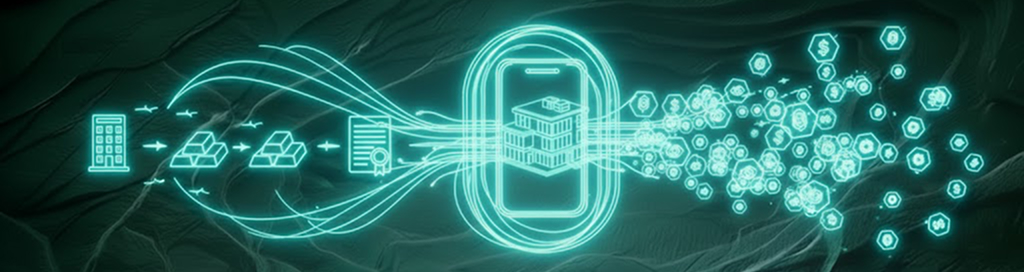
DARCA as a bridge to a new financial reality
RWA in DARCA is a module that turns “investing in the real world” into a familiar banking experience, and tokens into liquid digital rights that can be managed like money.
The RWA module in DARCA solves the key problem the market cannot solve at scale: giving people access to real assets as easily as to an in-app balance, with transparent rules, documents, and clear statuses. This is not “just another product”, but a new layer of financial infrastructure where assets become digital, manageable, and interconnected with the bank’s core.
Info
All RWA tokens in DARCA are transferable within the ecosystem: they can be freely sent to other DARCA users and listed on P2P, within compliance rules and regional availability.
Liquidity as a core principle, not an “option”
RWA Token  ──► Send to DARCA user  ──► P2P listing  ──► New owner
    │                 │                   │              │
    └─────────────── Same asset ─────────── New liquidity ────────┘
Transferability and P2P are what transform RWA from a “long-term investment” into an asset that lives in the digital economy. The user gains the ability to manage the position without unnecessary barriers, while the ecosystem gains continuous liquidity turnover and organic growth of trust in the product.
Tip
The higher the liquidity and transparency, the faster RWA becomes a familiar instrument for the mass user, and the higher the turnover inside DARCA.
Why this module can become a “big story”
RWA opens DARCA to markets that are many times larger than the crypto segment: treasury instruments, metals, real estate, and the services around them. At the same time, each asset class reinforces the others:
- T-Bills - an anchor of reliable liquidity and a clear “parking” instrument.
- Metals - a defensive asset and trust through provable backing.
- Real Estate - long-term capital that creates recurring flows and multi-year LTV.
- P2P - a turnover accelerator and network effect.
Note
When assets become digital and liquid inside a single bank, the user stops “jumping” between services and stays where it is faster, clearer and safer.
What this gives DARCA at the business level
RWA is a module that builds scale not through loud promises, but through architecture:
- inflow of users from the “non-crypto” audience through understandable assets;
- increased capital retention within the ecosystem;
- recurring revenue from infrastructure (operations, services, partners, subscriptions);
- reduced fragmentation: money, assets, and documents in one place.
More Assets  →  More Users  →  More Liquidity  →  Better Deals  →  More Assets
     ▲                │              │                 │              ▼
     └────────────────┴──────────────┴─────────────────┴──────────────┘
Final thesis
RWA in DARCA is a bet on a market that grows where people need one simple thing: to manage real assets as easily as sending money. When tokens become transferable, P2P adds liquidity, and all of this is connected to the banking core, an infrastructure emerges that can scale across new regions, new assets, and new usage scenarios without losing transparency and control.
Danger
RWA has a cost of entry - process discipline, compliance, and provability. But it is exactly these constraints that make the product “institutional” and turn trust into scale.