Audience - Freelancers
Info
A freelancer operates in a “income - deadline - decision” mode and does not tolerate fragmentation. DARCA brings fiat and crypto into a single perimeter and provides a managed process from payment to taxes and protection.

Who freelancers are in DARCA
Individuals with recurring project-based income and international payments who need a unified money perimeter.
A freelancer is a person whose income arrives “in portions” from projects, often from clients in different countries and almost always requires immediate action: receive payment - exchange - withdraw - allocate - pay obligations - preserve the remainder.
Typical roles:
- digital services: development, design, marketing, content, analytics, product consulting
- expertise “by the hour”: consulting, audit, mentoring
- micro-teams: freelancer + 1-3 contractors who need fast settlements
Within the segment, there are maturity levels:
- beginner - wants “like a bank” and is afraid of making mistakes
- confident - values speed and transparent transaction outcomes
- experienced - builds rules, protection perimeters, reserves and a long-term horizon
Note
The key distinction in freelancing is not the profession, but the rhythm. It is constant “micro-operations” and low tolerance for uncertainty - where is the status, how much will I receive, what should I do next.

How they earn and receive payments
Mixed incoming fiat and crypto is normal, and pain appears at the intersections and in manual steps.
Freelancers receive payments:
- in fiat
- in crypto
- in stablecoins
- mixed - advance via one method, remainder via another
For them, crypto is not a “game”, but a practical second route:
- 24-7 settlements
- more convenient when the client has a different bank, different country, different payment context
- stablecoins as a mode of “received and stabilized”
What most often breaks the process:
- the need to quickly understand the final outcome (after all fees and exchanges)
- risk of making a mistake with network/payment details in external actions
- having to assemble a chain of bank, exchange, wallet, exchanger and P2P manually
Warning
For a freelancer, it is not enough to simply “receive payment”. What matters is that the next step is obvious and secure - without manual “assembly” across services and without the risk of a network error.

Main financial goal and priority logic
Controllability is more important than maximizing returns: money must be predictable, accessible, and protected.
A freelancer chooses a system based on practical criteria:
- predictability - how much is “net” and when
- speed of executing the action chain
- control - statuses, history, notifications, clear steps
- access security - income must not be lost due to error or breach
Key psychological factor:
- a freelancer rarely operates under an “ideal financial plan”
- they need a process that works even when tired, rushed or on the move
Tip
For a freelancer, “convenience” means shortening the chain. “Received → exchanged → allocated → paid obligations → protected the remainder” should be a single flow, not five separate applications.

Top pains - most frequent and most costly
Freelance pain is not in a single step, but in the gaps between steps and in the risks of manual actions.
-
Fragmentation of tools
Bank separate, crypto separate, exchange separate, P2P separate, agreements in chats, accounting in spreadsheets.
Cost - time, mistakes, stress, lack of a unified overview. -
Errors and uncertainty in external actions
Network, payment details, fees, final outcome, statuses.
Cost - lost funds or “long investigations” instead of work. -
Taxes and mandatory payments as a tail after income
Money arrives - then manual accounting, manual actions, postponement.
Cost - chaos, missed deadlines, loss of sense of control. -
Access risk and fraud
A freelancer often works “on the phone”, on the move, across multiple devices.
Cost - the most severe scenario: loss of access to income.
Example
One typical freelancer week turns into dozens of micro-steps.
If each step is in a separate service - the probability of error increases and fatigue comes from context, not from the work itself.

What they do today and where the path breaks
They assemble “their own payment system” manually - and pay for it with attention and risk.
The current setup almost always looks like this:
- a bank for fiat
- an exchange for crypto
- a separate wallet
- an exchanger
- P2P as a backup bridge
- chats and documents stored separately
Where stress most often arises:
- at the moment of choosing the network and payment details
- when the final outcome and conversion losses are unclear
- when limits and checks appear “afterward”
- in P2P, where execution and counterparty risk must be understood
- when support cannot drive the action because “it is another service”
Question
If tomorrow you need to receive a payment from another country and complete the entire chain by the end of the day - how many services will you need to open, how much data will you need to double-check, and where can you make a mistake?
A freelancer feels the cost of this uncertainty every week.

Why DARCA for freelancers
DARCA turns chaotic “assembly” into a system: statuses, validations, unified history, and expansion through modules.
A freelancer chooses DARCA not “for crypto”, but for a managed perimeter:
-
Fiat and crypto in one banking interface
A unified view of balances and transactions, without a split between worlds. -
External actions with validations before confirmation
Reduced risk of network and payment detail errors, fewer “blind” clicks. -
In-app exchange with purpose
Conversion becomes part of the process, not a separate journey across exchangers. -
Personal taxes as a Core action
Income does not remain “in the head” - it follows a path to the mandatory step within the same perimeter. -
Support as part of the product
Chat, scenario buttons, deep-links - fewer explanations, more actions. -
Modularity without overload
The Core remains everyday, enhancements activate by triggers - security, vault, P2P, messenger.
Danger
The most expensive freelance risk is an error or loss of access at the moment when money is needed “now”. Therefore, validations, statuses, and protection perimeters are not “features”, but the foundation of trust.

Core usage map
Must-have closes daily freelance chains, nice-to-have strengthens habit and reduces manual work.
Must-have Core functions for a freelancer:
- unified fiat + crypto balances
- notifications on incoming funds and account events
- transaction history with clear statuses
- internal transfers - fast settlements with contractors and close contacts
- external transfers with validations before confirmation
- in-app exchange with a predictable outcome
- personal taxes as a step after income
- in-product chat support
Nice-to-have at first touch:
- quick repeatable actions for regular operations
- more granular control and notification modes
- additional scenario hints and onboarding via Academy
Info
The Core must create the feeling of “I control the process”. When there are statuses, notifications, and a clear outcome before confirmation, the freelancer stops carrying everything in their head.

Which modules will be included first
Modules are activated not “out of interest”, but by triggers: amounts, income volatility, access risk, and operational frequency.
Modules that freelancers realistically enable:
-
Enhanced Security - when amounts become meaningful or work happens across multiple devices
Login policies, session control, stronger verification on new devices, risk-response modes. -
Savings Vault - to automate the “mandatory”
Goals and rules that turn saving into a habit rather than a promise to oneself. -
Crisis Vault - when income is irregular and a rule-based reserve is needed
Strict access, hold mechanisms, action logs, auto-protection in stress scenarios. -
P2P - when a backup route for receiving or withdrawing is required
Not a “trust market”, but a managed scenario within the ecosystem. -
Messenger - when invoices, receipts, and agreement statuses matter
Agreements become status-based objects, not chats and screenshots. -
Cold Storage - when capital accumulates
Separation of “long-term” funds from daily balances without slowing down the Core. -
Staking and RWA - after the process stabilizes
A “long horizon” mode for part of the audience once the base perimeter is configured.
Note
A key growth trajectory: a freelancer starts as an individual and uses personal taxes within the Core.
When they become a studio or agency, they activate Business, where corporate taxes and processes live separately, without migrating to another product.

Triggers that activate modules
The activation moment is easy to read from real life: amounts grow, risk grows, regularity grows.
- Amounts increased - enable Security and Cold
- Income became irregular - enable the Vault and reserve rules
- Regular incoming payments appeared - enable Savings and goals
- International clients and multiple payment routes appeared - activate P2P
- Payment and agreements need to be recorded - enable Messenger
- Desire for a “long mode” without trading - connect Staking or RWA
Warning
A freelancer does not want to “study the product”. They want to enable enhancements exactly when life signals it: riskier, more complex, or more expensive in time.

Key usage scenarios
The formula is the same: situation - task - action in DARCA - predictable result.
-
A client from another country pays in crypto
Situation - need to receive payment quickly and clearly
Action in DARCA - incoming funds within a unified perimeter, statuses and notifications
Result - money “in the bank”, ready to exchange, distribute and cover mandatory steps -
Need to transfer funds externally without network errors
Situation - external transfer for a specific purpose
Action in DARCA - validations before confirmation, clear steps
Result - fewer mistakes, less stress, predictable execution -
Need part in fiat “on hand”, part in stables
Situation - income received in crypto
Action in DARCA - in-app exchange with purpose
Result - allocation aligned with real needs, without visiting separate exchangers -
Need to distribute income across perimeters
Situation - payment received, expenses and obligations ahead
Action in DARCA - Savings and Vault as rule-based tools
Result - funds do not dissipate, a structured reserve appears -
Need taxes as a regular step after income
Situation - income received, mandatory payments must not be forgotten
Action in DARCA - personal taxes inside the Core
Result - less manual effort, stable discipline -
Need to protect capital from daily access
Situation - accumulated amount, fear of losing access
Action in DARCA - Cold Storage and Enhanced Security
Result - capital separated, strict access, session control and risk response -
Need to agree on payments with proof
Situation - milestone-based payments, status tracking required
Action in DARCA - Messenger with objects and statuses
Result - fewer misunderstandings, less “screenshot accounting”
Example
A strong freelance loop: “receive payment → exchange → allocate → taxes → reserve”. It repeats and turns DARCA into a habit, not a “just-in-case app”.
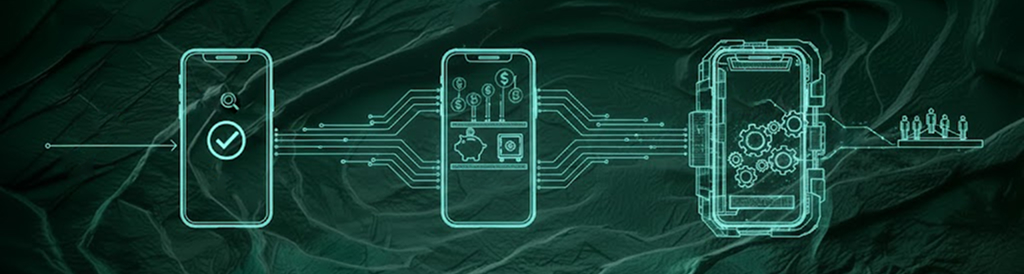
Entry threshold and retention path
Retention is built on the first full loop: receive payment and close the entire flow in one place.
The first 10 minutes must be about action:
- registration without overload
- first top-up or first incoming payment
- first exchange with a clear outcome
- first transfer with validations before confirmation
- first feeling of “I see statuses and understand the next step”
First 7 days - process formation:
- incoming funds start to “settle” in one perimeter
- the user performs 2-3 purpose-driven exchanges
- sets up Savings or Vault for obligations and reserve
- enables a basic security mode
First 30 days - modular reinforcement:
- P2P connected as a backup route when needed
- Enhanced Security or Cold Storage enabled as amounts grow
- habit is reinforced: “income → taxes → allocation”
Tip
The strongest retention signal is not “many features”. It is a repeatable flow where time is saved at every step and manual bridges disappear.

Risks, objections, and how the product addresses them
For a freelancer, control matters: fewer errors, clear statuses, secure access, and support “in context”.
-
“It’s complicated”
Solution - banking-grade UX, modular structure, Academy as soft guidance without overload. -
“I’ll make a network mistake”
Solution - validations before confirmation and clear steps for external actions. -
“I might lose access”
Solution - enhanced security: device key, stronger verification, session control, risk reactions, panic and duress modes. -
“Support won’t help me”
Solution - in-app chat support, actions and deep-links directly in dialogue, operator in context. -
“P2P is risky”
Solution - P2P as a structured scenario inside the ecosystem, with governance and constraints. -
“It will be expensive”
Solution - value through measurable outcomes: limits, fewer fees, fewer losses from mistakes, security and priority support.
Warning
Any uncertainty means stress and lost time. That is why statuses, control, and support in one place matter more than a “feature showcase”.

What they bring to the system and why they stay
Freelancers bring frequency and retention: regular incoming payments, exchanges, allocation, taxes, and gradual module activation.
Freelancers contribute to the ecosystem:
- recurring operations (incoming funds, exchange, transfers, allocation)
- long-term “stickiness” through the loop “income → mandatory → reserve”
- natural module upgrades, as life pushes toward protection and rules
- a growth path into Business without migration, when freelance evolves into a studio
Why they stay:
- manual assembly across services disappears
- a system appears where money does not “scatter”, but is governed by rules
- security and support reduce fear of mistakes and loss of access
Reasons they might leave, and prevention:
- hard to start - short first-action path and scenario guidance
- unclear statuses and outcomes - transparency and validations before confirmation
- slow support - chat with actions and completion to resolution
- unclear pricing - clear limits and value through tangible benefits
Note
A freelancer does not need “another service”. They need a system where the same perimeter handles international payments, mandatory steps, and income protection - without constant switching and manual risk.