Audience - Mass “Everyday” Users
Info
These are mass-market users who choose a product by one criterion - peace of mind in everyday money. For them, DARCA is a unified fiat + crypto framework with control, statuses, and security.

Audience Profile
People with “short” daily financial tasks and low tolerance for chaos, surprises and mistakes.
These are individuals for whom finance is not an “investment project”, but repeated actions: transfer, pay, exchange when needed, keep a reserve, quickly understand what happened to the money.
Within this segment, several behavioral subtypes are most common, and they all converge on one thing - they need predictability:
- “High-tempo” people - many small transactions, service payments, subscriptions, transfers to close ones, minimal time to figure out interfaces.
- “Family framework” - regular transfers within the family, shared goals, the desire to see history and avoid disputes like “who sent how much”.
- “Mobile mode” - travel, online purchases, service subscriptions, sometimes the need to quickly transfer or exchange without opening three different apps.
- “Cautious” users - fewer actions, but high sensitivity to scammers, losses, and mistakes. For them, control and protection matter more than new capabilities.
Note
For these users, it is critical that the “right path” is built into the product. DARCA is designed as a unified system: money, statuses, notifications, support, and baseline security operate within one framework, while extensions are added through modules without overloading the Core.
-
Age and life stage
- The core of the segment is 25-44, with “tails” at 18-24 and 45-54.
- 18-24 - first independent money, subscriptions, fast transfers, high UX sensitivity.
- 25-34 - high tempo, many small operations, online shopping, travel, “solve it in 2-3 actions”.
- 35-44 - more obligations and larger checks, stronger demand for control and security, less tolerance for surprises.
-
Habits and financial behavior
- “Short sessions”: log in, check, confirm, close.
- “Zero tolerance for uncertainty”: if terms and outcome cannot be seen in advance, the action is postponed or moved to an “old trusted” service.
- “Operations as routine”: transfers to close ones, service payments, exchange “as needed”, reserves - not an event, but a repeated pattern.
-
Hobbies and everyday rhythm (not as “targeting”, but as context)
- Leisure is often “block-based”:sports/fitness, walks, meeting friends, relaxation at home, hobbies with regular expenses (learning, tech, games, travel, children).
- A lot of everyday coordination happens in chats - hence constant scenarios like “send”, “split”, “I’ll return”, “let’s collect”.
-
Income and how they earn
- The main source is salary (office, hybrid, remote).
- A frequent “second stream” is side gigs and freelance work, project-based payouts, bonuses, sometimes transfers from family.
- An important psychological detail: they do not think in terms of a “portfolio”, they think in terms of “availability” and “reserve”.
-
How they spend
- Regular essentials: food, transport, mobile, housing, household payments.
- “Silent leaks”: subscriptions, marketplaces, online services, digital purchases.
- “Periodic spikes”: travel, tech, health, education, child-related expenses.
- This segment has a high share of online purchases, especially in ages 25-34 and 35-44.
Source: Eurostat - E-commerce statistics for individuals
-
How they save
- Not an “investment strategy”, but 2 simple modes:
- “Reserve for peace of mind” - keep separate and not touch impulsively.
- “Goals” - vacation, renovation, tech, education, large payments.
- Auto-rules work best: “save invisibly”, “protect the reserve”, “make access stricter”.
- Not an “investment strategy”, but 2 simple modes:
-
Where they are in the digital environment
- It does not matter whether they “use social media” (everyone does), what matters is:
- they trust what can be quickly verified: reviews, friends’ experience, clear interface, transparent terms
- they prefer short content: short videos, “how it works” reviews, “before/after” comparisons
- Financial decisions for them are often triggered not by ads, but by a “situation”: a transfer, travel, a purchase, the need to quickly and safely exchange/send.
- It does not matter whether they “use social media” (everyone does), what matters is:
-
Why they need a crypto-fiat bank and why they will use crypto
- They are not “going into crypto”, they adopt secondary rails alongside fiat - when it reduces friction in real tasks:
- send externally 24-7, without being tied to banking hours
- keep part of a reserve in stable mode (as a tool, not an ideology)
- convert “as needed” (for a transfer, a reserve, a specific purchase)
- have a backup route (for example, via P2P) if the “usual path” does not work
- enable a yield mode without trading (staking) when there is leftover balance
- A signal that this is no longer “exotic”, but real behavior: in the euro area, the share of households holding crypto assets is measured in single and double-digit percentages depending on the country and methodology, while for most people the amounts are small - crypto is used as a function, not a lifestyle.
Sources: - ECB - Hearing of ECON committee (23 Jun 2025),
- ECB - Financial Stability Review special (12 May 2025)
- They are not “going into crypto”, they adopt secondary rails alongside fiat - when it reduces friction in real tasks:
-
What shaped them culturally (generation language, without stretching)
- Their cultural base is mass media content of the 2000s and 2010s, and their current habit is streaming and short-form content.
- They are used to “clear interfaces”, where the system guides them along the right path instead of requiring manuals.
-
What is “wow” for them, and what is a stop signal
- “Wow” - a predictable outcome before confirmation, impossibility of accidental mistakes, clear statuses, fast support, security without unnecessary complexity.
- Stop signal - surprises, unclear restrictions, отсутствие status, the need to “go into another app”, the feeling that “I have to figure it out myself”.
Additional context of EU digital norms: internet banking is widespread in the EU (on average across the EU, about 67% of the population aged 16-74 used the internet for banking operations in 2024). Source: Eurostat - Digitalisation in Europe (2025) Eurostat - E-commerce statistics for individuals (2024), ECB - Hearing ECON committee (23 Jun 2025), ECB - Financial Stability Review special (12 May 2025), StatCounter - Mobile OS market share Europe (Dec 2025).

Habits and Behavior
Short logins, quick checks, targeted actions - and an instant fallback if uncertainty appears.
Their financial day looks like a series of “micro-actions”, where the most important thing is clarity:
- Short app sessions to check the balance, see the outcome of an operation, complete the task, and exit.
- Low tolerance for “unclear”: if they cannot see terms and the final result in advance, they prefer not to take the action at all.
- They do not want to “learn financial tools”, they want the product to prevent mistakes in advance and provide control without effort.
Their trust triggers are simple and practical:
- “I can see what’s happening” - statuses, history, notifications.
- “I can’t make an accidental mistake” - checks before confirmation.
- “If something goes wrong, I will be guided to a solution” - support as part of the product, not a separate department.
Warning
For the mass segment, “complexity” is not the number of features. Complexity is when you have to assemble finances across different services and keep the rules in your head: fees, networks, limits, confirmations, and risks. DARCA deliberately removes this fragmentation through a unified Core framework and attachable modules.

Why They Need Crypto and Why It Will Become Everyday
Crypto here is not an “ideology”, but rails and tools that provide control, 24-7 availability, and alternative routes.
Mass-market users start using crypto not because they “love crypto”, but because in real life there are regular situations where crypto solves a task more easily than the traditional combination of “bank + exchange + wallet + exchanger”.
Typical reasons that make crypto behavior part of everyday life:
-
24-7 transfers and “no waiting for banking hours”.
When money needs to be sent quickly, not “during business hours”, crypto rails become a natural choice. In DARCA, this is not a separate product - it is part of the Core transfer layer. -
Stables as “digital stability” alongside fiat.
Even cautious users are willing to hold part of their funds in stable assets if it is built into a clear framework: balances, history, and availability are visible, with strict security and withdrawal rules. -
Exchange as needed, not “trading”.
Most mass-market operations are not speculation, but conversion for a specific purpose: a purchase, a transfer, a reserve. In DARCA, exchange is embedded into the Core with the logic “what I give - what I receive - terms - final result”. -
Alternative routes for entry and exit.
When a person needs another path, the P2P module can be enabled - with auto-reserves, auto-calculations, and rules that reduce risk and manual errors. -
Yield without trading.
If a user has leftover balance, they start thinking “let it work” - and staking becomes a clear mode, without turning the person into a trader.
Tip
The key point: a mass user is willing to use crypto only when it feels like “regular money”, but with better rails. That is why DARCA unifies fiat and crypto in one framework, and security and support are built into the same action route.

Systemic Pain Points and Why They Cannot Be Solved Piecemeal
Their pain is not “one fee”, but the constant manual assembly of finances across different rules and interfaces.
-
Fragmentation
Fiat in a bank, crypto in another app, exchange in a third, proof of payments in chats and screenshots. The result - the person has to “glue” finances together manually and carries responsibility for mistakes. -
Unpredictable outcomes
When transaction terms are not visible in advance, even simple actions feel risky. A mass user does not bargain over 0.1 percent - they avoid situations where “it might go wrong”. -
User errors as the primary fear
Sent to the wrong place, chose the wrong network, took the wrong step - and it feels irreversible. That is why the logic of “check - confirm - execute” and protection against common mistakes is critical. -
Scams and emotional pressure
Scammers win not through technology, but through psychology. If a product lacks risk frameworks, holds and step-up confirmations, the user lives in anxiety, even when “everything is fine”. -
Support that cannot drive resolution
When an operator can only “explain” but not help with action, any mistake becomes expensive in time and nerves.
Danger
These pain points are not fixed by “adding one more button”. What is needed is a system where transfers, exchange, statuses, security and support operate as one route, without manual assembly.

Why They Choose DARCA
The reasons for choosing it are specific Core and module mechanisms that reduce mistakes, remove chaos, and make transaction outcomes predictable.
-
One unified framework instead of “bank + exchange + wallet + exchanger”
In DARCA, fiat and crypto live in one interface with a unified history, statuses and notifications. -
Instant internal transfers with no fees
Everyday actions like “send” and “receive” become fast and safe, without addresses or manual details. -
External transfers as a baseline layer with checks before confirmation
The key logic is seeing terms in advance and reducing the risk of user mistakes, including network and payment detail errors. -
Exchange is embedded into the Core and transparent in outcome
The user sees “what I give - what I receive - terms - final result” before confirming, without jumping between services. -
Support as part of the product: chat with actions
A bot or operator can guide the user to a result through buttons and deep links. Non-critical actions are completed quickly, critical ones are confirmed by the user. -
Modularity triggered by real needs
The Core stays simple. Strengthening is activated when a real need appears: discipline, reserves, growing amounts, the need to “separate capital”.
Example
A mass user chooses DARCA at the moment they realize: there is no need to “be an expert” - the system guides them along a safe route and all operations look equally clear across any Core and module scenarios.

Usage Map: Core and Modules
What becomes a daily habit and what is enabled through life triggers.
Top Core Functions - Frequent Actions
- Unified balances for fiat + crypto and a single transaction history
- Instant internal transfers via phone, contacts or email
- External transfers with checks and a preview of terms before confirmation
- Exchange inside the app with a transparent final outcome
- Notifications and financial clarity across events and statuses
- Baseline security and confirmation framework
- Support inside the app as a continuation of the scenario, not a “separate entry point”
Modules - What They Enable and Why
-
Saving
Trigger: wanting to save effortlessly without constant discipline.
Covers: goals, auto-top-ups, smart frugality, predicting insufficient funds, shared goals. -
Habit tracker
Trigger: needing discipline and control over impulsive spending.
Covers: commitment mechanics, gentle and strict modes, transparent logs, anti-toxicity. -
Anti-Crisis Vault
Trigger: needing reserves and protection from emotional decisions, especially during market volatility.
Covers: auto-protection, shifting a portion into stable, strict unlocking, configurable holds, activity logs. -
Enhanced security
Trigger: growing amounts, rising anxiety, a new device, travel, elevated risk.
Covers: device key, strengthened verification, single session, session history, temporary credentials, anti-fraud and smart delays. -
Cold storage
Trigger: having capital that should not be mixed with everyday actions.
Covers: a separate storage framework without slowing down the Core, stricter access policies. -
Staking
Trigger: having leftover balance and wanting yield without trading.
Covers: a hybrid model and liquid staking mode within the ecosystem. -
Messenger
Trigger: everyday agreements, collections, debts, “send - I’ll return - let’s split”.
Covers: financial objects with statuses, receipts, provability, a protected communication framework. -
P2P
Trigger: needing an alternative exchange route or entry/exit.
Covers: auto-reserves, auto-calculations, ratings and limits, fewer manual errors and risks.
Question
Where does crypto become “everyday”? Where the user gains not a “new risk”, but new control: 24-7 transfer rails, stables as a mode, exchange as needed, P2P as a backup route, staking as understandable yield.

Key Scenarios
Situation - job - action in DARCA - result.
-
Situation: need to quickly “send” money to someone
Job: transfer with no fees and no extra steps
Action in DARCA: instant internal transfer
Result: transfer completed immediately, with a status and a record in history -
Situation: need to send externally
Job: avoid mistakes with networks, details and terms
Action in DARCA: external transfer with checks and preview before confirmation
Result: minimized errors, a clear route and a clear status -
Situation: need to exchange fiat into crypto or or vice versa for a task
Job: understand the outcome and terms in advance
Action in DARCA: Core exchange with the scheme “what I give - what I receive - terms - final result”
Result: predictable conversion without jumping between services -
Situation: want to keep a reserve and not spend it impulsively
Job: separate a “safety cushion” from everyday money
Action in DARCA: Anti-Crisis Vault and access policies
Result: the reserve is protected, with rules and an activity log -
Situation: amounts have grown and anxiety increases
Job: strengthen security without complicating everyday actions
Action in DARCA: Enhanced security with confirmation and session modes
Result: fewer risks, more control -
Situation: there is an amount just sitting idle
Job: “let it work”, but without trading
Action in DARCA: staking as a mode
Result: understandable yield without moving into separate apps -
Situation: “let’s split the payment”, “collecting for a gift”, “I’ll return it on Friday”
Job: capture the agreement and not lose context
Action in DARCA: Messenger with financial objects and statuses
Result: fewer disputes, more verifiability and order
Info
These scenarios make crypto the norm not through “persuasion”, but through practice: crypto is used where it provides better rails and fewer errors, while staying within one framework alongside fiat.

Retention Mechanics
Users return through repeated events: control, statuses, reserves and familiar actions that “don’t break”.
- Notifications and transaction statuses build the habit of “quickly checking”
- Recurring transfers within the system turn DARCA into a daily rail
- Saving and habits create a sense of progress and retain users effortlessly
- The Vault reduces anxiety and removes impulsive decisions
- Support in chat with actions reduces fear of mistakes - the user knows they will be guided to a result
Note
In this segment, retention is built not on “emotions”, but on trust in the rails. If everyday scenarios consistently follow the route “clear - checked - confirmed - recorded”, the product becomes habitual.

Risks and Objections - and How They Are Addressed
Mass-market fears are practical: mistakes, scammers, loss of access, lack of understanding, complexity, absence of help.
-
“I’m afraid of making a mistake during a transfer”
Addressed by: previewing terms and checks before confirmation, unified status and history logic. -
“I’m afraid of scammers and social engineering”
Addressed by: a risk framework, step-up confirmations, rule-based holds, enhanced security as a module. -
“I’m afraid of losing access”
Addressed by: device key, strengthened procedures on a new device, session history and login notifications. -
“I don’t want to understand crypto”
Addressed by: crypto being embedded into the same framework as fiat, plus DARCA Academy as learning without the overload of scenarios. -
“I don’t want the app to become complex”
Addressed by: modularity - the Core stays simple, modules are enabled by triggers and do not break the baseline UX. -
“Support is usually useless”
Addressed by: in-app support with buttons and deep links, the ability to resolve non-critical actions inside the dialogue, while critical actions are confirmed by the user.
Danger
The main threat for the mass segment is the combination: mistake + stress + inability to fix it quickly. DARCA designs routes so that this combination breaks before money is gone.

Youth and “Digital Lifestyle” - Social Money + Digital Spending
Info
This is an audience aged 18-29 (core) and 30-34 (extended), for whom money is part of social and digital life. They log in “for 20 seconds”, but do it often - and they do not forgive chaos, surprises, and manual assembly across 4 services.
Profile - Who They Are
- Age: 18-29 core, 30-34 extended.
- Status: studies + side work, early career years, hybrid/remote, frequent changes of tasks and locations.
- Rhythm: many micro-payments, subscriptions, shared expenses, “send/split/I’ll return”.
- EU digital norm: 97% of people aged 16-29 use the internet daily, 88% use social media.
Source: Eurostat - Young people - digital world
Note
For this audience, “a bank once a month” does not work. What works is a product that becomes part of the routine: transfers, statuses, control, fast resolutions.
Interests and Hobbies (How They Show Up in Spending)
- Digital leisure: streaming, short-form content, games, subscription services.
- Social activities: meetups, shared purchases, collections “for a gift/trip”.
- Learning: courses, subscriptions, paid services.
- Spending is often “small but constant”: deliveries, marketplaces, donations, in-game purchases, subscriptions.
Tip
Their money “leaks” not through one big decision, but through dozens of small ones. That is why the key effect comes from control and automation, not “complex investment tools”.
Income and Money Sources
- Main: junior-mid salary.
- Additional: freelance, side gigs, one-off payouts, sometimes transfers from family.
- Psychology: they do not like “freezing” money - funds must stay accessible and manageable.
Where They Are Digitally
- Social media: short format, stories, video.
- Messengers: where “social accounting” happens - agreements and confirmations.
- Devices: Android dominates, with a high iOS share - biometrics and fast confirmations are already привычка.
Source: StatCounter - Mobile OS Europe (Dec 2025)
Warning
A person being “on social media” says nothing about whether they are our customer. What matters is that they make decisions based on the first-action experience: is it clear, is it safe, can you make a mistake, is there a fast path to resolution.
Main Goal and Main Pain
- Goal: “money should be fast, clear and social”.
- Pain: fragmentation (bank separate, crypto separate, exchange separate, P2P separate) + fear of mistakes (network/address) + irritation with “script-based” support.
Why They Need a Crypto-Fiat Bank and Why Crypto Becomes Practical
Crypto for them is not an “ideology”, but secondary rails alongside fiat:
- 24-7 transfers and settlements without waiting for “banking hours”.
- Stable as a “mode” - reserve or fast settlements when it is more convenient.
- Exchange as needed within one interface, without a separate service.
- P2P as a backup route for entry/exit when the “usual” path is inconvenient.
Example
A typical trajectory looks like: first “send to friends” and “split payments” - then “exchange for a purpose” - then “keep a reserve in stable” - then “enable P2P as a backup route”. Crypto becomes familiar only within a framework that includes checks and statuses.
What They Do Now Instead of Us (and Why It Doesn’t Work)
- Stack: a bank for fiat + a separate crypto service/wallet + an exchange/P2P + a messenger for agreements.
- Why it’s bad:
- different UX and rules in each place
- manual transfers and screenshots
- network/address mistakes as the “cost of fragmentation”
- support is not embedded into the action and does not guide to a result
Danger
Young users have even less “patience for friction” than the mass segment. If the first week is surprises and manual assembly, they leave.
Why They Will Leave Their Bank
- A bank covers fiat, but does not cover digital life: there is no unified fiat + crypto framework, no convenient exchange, no proper P2P scenarios, support is slow and “explains” instead of resolving.
Why They Will Come to DARCA
- Unified framework for fiat + crypto - without “4 apps”.
- Instant internal transfers with no fees - social money becomes a habit.
- External transfers with checks before confirmation - fewer network and details mistakes.
- Chat-based support with buttons and deep links - less friction, faster resolution.
- Modularity - they enable only what they truly need.
What They Use Most Often from the Core
- Unified balances for fiat + crypto and transaction history.
- Internal transfers as “social money”.
- External transfers with checks before confirmation.
- Exchange inside the app with a clear final outcome.
- Notifications and statuses as control.
- Support inside the app.
Modules - What They Will Enable and Why
- Messenger - debts, splits, and collections as objects with statuses.
- Saving - goals and automatic saving rules.
- Habit tracker - spending discipline and anti-impulse control.
- My Games - if there are gaming expenses: a separate budget and limits.
- NFT - for those already touching NFTs and wanting a safe framework.
- Enhanced security - when amounts grow, during travel or on a new device.
- Staking - when there is leftover balance and “let it work”.
Top-5 Jobs (Most Frequent Cases)
- Send money to friends - fast and with no fees.
- Split a payment - capture the status and avoid disputes.
- Exchange for a purpose - without going to another service.
- Keep a small reserve - often in stable mode.
- Control subscriptions and digital spending - through goals and discipline.
How We Attract and Retain
- Acquisition: short-form content, influencers, communities, partnerships around scenarios (games, subscriptions, shared collections).
- Retention: transfers and splits as recurring events + goals and habits + notifications and statuses + in-app support.
Info
Retention is built on rhythm: social transfers → statuses → control → the next recurring scenario.
What They Are Willing to Pay For, and What They Are Not
- Willing: time savings, fee-free limits, strengthened security, premium support, useful modules (goals, discipline, reserves).
- Not willing: “paying for the basics”, hidden fees, complex plans without clear value.
What They Fear the Most
- Scams and pressure, network/address mistakes, loss of access, sudden restrictions and the absence of a fast resolution through support.
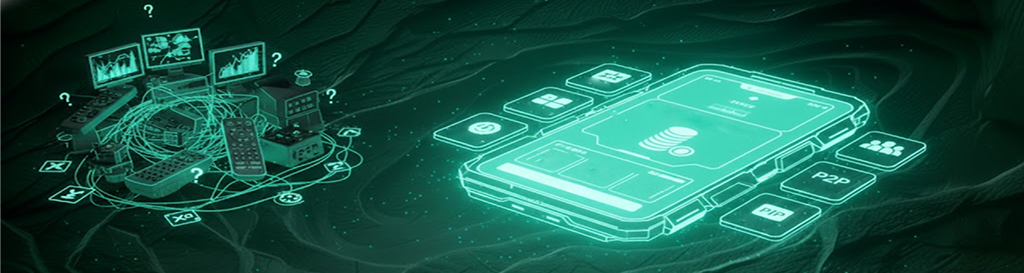
Crypto Enthusiasts - Active Users of Crypto Tools
Info
These are people for whom crypto is not an “option”, but an everyday tool. They are looking not for “just another wallet”, but for a system: rails, control, security, P2P, staking, RWA - within one unified framework.
Who They Are
- Age (typical): core 22-44, extended 18-54 - this is not “about age”, but about level of engagement.
- Lifestyle: “investor/light trader”, “digital nomad”, “entrepreneur/self-employed”, “tech specialist”, “high-intensity money management”.
- Context: they often use multiple networks and services, keep part of assets in stable, part in BTC/ETH, sometimes alts, NFTs and test new tools.
- Interests and hobbies (how they show up in actions):
- DeFi and markets, on-chain news, security, portfolios, communities
- tech environment, gadgets, games/digital assets (for some)
- self-discipline practices and risk control (for more mature users)
Note
Their “social media” is not just feeds. These are channels of reality-checking: communities, discussions, reputation, comparing terms, hack cases and anti-fraud advice.
Main Goal and Main Pain
- Goal: manage crypto and fiat money as one unified system - fast, secure, with a clear outcome and without manual “assembly”.
- Pain (systemic): fragmentation and the risk of human error at the junctions (exchange - wallet - swap - P2P - bank - messengers), plus constant anxiety about access, security and the legitimacy of the route.
What They Do Now Instead of Us (and Why It Doesn’t Work)
- Stack: bank (fiat) + exchange + multiple wallets + P2P/swap services + spreadsheets/notes + chats.
- What frustrates them:
- different rules, fees, and status logic everywhere
- manual transfers, “let me check the address again”, “is this definitely the right network”
- support that is “out of context” and the inability to quickly drive a case to resolution
- too many attack points where access can be lost or mistakes can happen
Warning
For enthusiasts, “convenience” is not about pretty screens. It is about fewer points of failure and fewer manual junctions between services.
Why They Will Come to DARCA
- Fiat + crypto in one framework - unified history, unified statuses, one support layer.
- Checks before confirmation in external operations - fewer network/details mistakes and less “click anxiety”.
- Modularity - they can assemble “their own stack” directly inside DARCA without splitting across apps.
- Security frameworks (enhanced security, cold storage) - not “generic words”, but access modes, sessions, policies, and risk-based holds.
- P2P and RWA within the ecosystem - not as separate products, but as scenarios connected to the Core and sec
What They Will Use Most Often from the Core
- Unified balances for fiat + crypto and a quick portfolio overview
- Internal transfers (fast, fee-free, without addresses)
- External transfers with checks before confirmation and clear statuses
- Exchange inside the app with a predictable outcome
- Notifications, event logs, access control
- Support in chat as part of the product - fast and “in context”
Which Modules They Will Enable and Why
- P2P - when an alternative entry/exit route is needed, with execution control without manual chaos.
- Staking - so that “idle balance works” in a clear mode, without constantly switching between services.
- Cold storage - to separate capital from everyday actions and strengthen access policies.
- Enhanced security - single session, session history, strengthened checks, risk-based holds, temporary credentials.
- Token creation - for those building their own assets/communities and wanting issuance inside the ecosystem with the ability to go external.
- NFT - storage and operations with an anti-scam framework (Verified/Unknown/Quarantine) + linked to security.
- RWA - when a “long-term asset” is needed with documentary transparency and circulation within the ecosystem.
- Anti-Crisis Vault - for risk control and rules like “move into stable by triggers”, plus strict access and logging.
- Messenger - for deals and agreements where statuses, verifiability and escrow logic matter.
Example
A typical enthusiast “setup” in DARCA: Core (balances, exchange, transfers) + P2P (routes) + Cold storage (capital) + Enhanced security (policies) + Staking/RWA (yield and the “long-term” portion).
Top-5 Jobs (Frequent Cases)
- Send externally fast and avoid network/details mistakes - with checks before confirmation.
- Convert for a purpose - exchange in one interface with a clear final outcome.
- Organize secure storage - separate capital and strengthen access.
- Use alternative rails - P2P as a system scenario, not a “chaotic market”.
- Launch “yield modes” - staking and/or RWA, plus transparent statuses and availability.
How We Attract and Retain
- Acquisition: communities and expert channels, “proof” through mechanics (checks, statuses, security), content around scenarios like “how to remove fragmentation”.
- Retention: recurring actions (transfers, exchange, P2P) + “peace-of-mind frameworks” (cold storage, enhanced security, vault) + yield modes (staking, RWA).
What They Are Willing to Pay For, and What They Are Not
- Willing: fee-free limits, premium security policies, extended storage frameworks, fast priority support, convenient “rails” without manual assembly, functions for P2P/RWA/NFT.
- Not willing: empty “premium badges”, hidden terms, illogical restrictions, “paying for the basics” without measurable value.

“Preserve and Protect” - Stability, Reserves, Long-Term Horizon
Info
These are people for whom money is about stability, not market emotions. Their key request is to protect access, separate “everyday” funds from “capital”, and build rules that work even in stress scenarios.
Who They Are
- Age (typical): core 30-55, extended up to 60+.
- Lifestyle: “family framework”, “frugal”, “risk manager”, “pragmatic investor”.
- Context: responsibility (family, mortgage, children, business risks), planning over months and years, heightened sensitivity to losses.
- Interests and hobbies (how they show up):
- health, family, home, children’s education, travel
- practical investing “for the future”, budget control tools
- less “hype”, more reading analyses and trusted sources
Note
They may use crypto, but not as a “game”. For them, crypto is a tool and “secondary rails”, where rules, reserves, and protection matter.
Main Goal and Main Pain
- Goal: preserve capital, ensure access and predictability, reduce the risk of mistakes and fraud, maintain a reserve that is hard to spend impulsively.
- Pain: fragmentation and the absence of “stress-case rules” - when protection is needed quickly, people are forced to act manually: moving between services, searching for “where to hide”, doubting security and access.
What They Do Now Instead of Us (and Why It Doesn’t Work)
- Stack: primary bank (fiat) + a separate deposit/account + sometimes a crypto wallet/exchange + a “reserve” elsewhere + notes/spreadsheets.
- Why it’s bad:
- no unified framework management - reserves, rules and security live separately
- stress scenarios are not automated - “in panic moments” people make mistakes
- difficult to separate capital from everyday spending and enforce strict access
- support does not help through action, it only explains what to do yourself
Warning
Their main fear is not “missing profit”. Their fear is losing access, making a mistake in a stress moment, or becoming a victim of scammers.
Why They Will Come to DARCA (3-5 Reasons Without Marketing)
- Separation of frameworks: everyday money in the Core, capital and reserves in protected modules.
- Anti-Crisis Vault with rules, logs, strict access, and the ability to auto-protect into stable by triggers.
- Enhanced security as a system mode: confirmation policies, session history, notifications, risk-based holds, duress/panic scenarios.
- Cold storage - separating capital without slowing down the Core, stricter access, and fewer risks of an “everyday click”.
- Transparent statuses and embedded support - if something happens, it is visible and manageable inside the product.
What They Will Use Most Often from the Core
- Unified balances for fiat + crypto, to see the full picture
- Transaction history and notifications as constant control
- External transfers with checks before confirmation and clear statuses
- Exchange “as needed” with a predictable outcome
- Chat support, so they don’t have to “figure it out themselves” in a stress moment
Which Modules They Will Enable and Why
- Anti-Crisis Vault - reserves, strict unlocking, holds, auto-protection, logs of reasons and actions.
- Enhanced security - device key, strengthened verification on a new device, session control, temporary credentials, anti-fraud, duress/panic modes.
- Cold storage - separating capital from the everyday framework.
- Saving - goals and gentle automation of savings.
- RWA (for mature users) - “long-term” assets, documentary transparency, and redemption logic by conditions.
- Staking (for some) - yield, but in a clear and controlled mode, without trading.
Tip
Their modular setup most often looks like: Core (everyday money) + Vault (reserves and rules) + Enhanced security (policies and anti-fraud) + Cold storage (capital).
Top-5 Jobs (Most Frequent Cases)
- Separate reserves from everyday spending and enforce strict access.
- Build rules for stress scenarios (holds, extra confirmations, auto-protection).
- Control access and sessions - see who logged in and from where and respond quickly.
- Understand transaction statuses and not act “blindly”.
- Grow savings through goals and discipline without overload.
How We Attract and Retain
- Acquisition: through the promise of “rules and protection”, not “yield”; through scenarios of family reserves, scam protection, separation of frameworks.
- Retention: a habit of control (notifications, statuses) + reserves in the Vault (strict access - money doesn’t “leak”) + peace of mind from security and transparent rules.
What They Are Willing to Pay For, and What They Are Not
- Willing: premium security policies, extended Vault modes, cold storage, priority support, fee-free limits, additional protection frameworks (holds, duress, shared control).
- Not willing: “paying for the basics”, hidden terms, complexity without explainable value, hype-driven tools.
What They Fear the Most
- Scams and social engineering, loss of access, mistakes in a stress moment, leaks, unclear transaction status, inability to quickly lock down and regain control.
Tip
Taken together, these segments form one funnel: people enter DARCA through everyday tasks, stay because of control and predictability, and then “build out” the product for themselves through modules - without changing the habitual Core framework.
- Mass-market users stick through transfers, purpose-driven exchange, notifications, and clear statuses - turning DARCA into a daily rail.
- Youth brings frequency through “social money”: send, split, collection, subscriptions, and digital spending - most often expanding through the Messenger, Saving and Habit tracker.
- Crypto enthusiasts “strengthen” the ecosystem: they value alternative rails (P2P), storage (Cold + Security), yield modes (Staking, RWA) - and they quickly move into advanced modules.
- “Preserve and Protect” forms the long horizon: they build reserves in the Vault, strengthen security, separate capital through Cold storage - and provide sustainable retention through peace of mind and rules.
The key logic is one: fiat and crypto work as a single tool in everyday scenarios, while modules allow each user to enable exactly the level of protection, control, and “long-term” capabilities that fits their life - without overloading the Core.