My Games
Info
My Games is a DARCA module for gamers that brings together gaming expenses, purchases, budgets, account data, and digital asset management into a single financial contour, without fragmentation and without compromising the convenience of the Core.

What this module is
This is not bank gamification, but a full-fledged user contour for gaming: money, purchases, and in-game assets become manageable and transparent.
My Games turns chaotic “gaming life” into a clear system:
- a dedicated spending contour for games with rules and limits
- purchases of in-game currencies and items directly from the bank via partners
- game connections and display of available account data
- management of subscriptions and recurring payments related to games
- accounting and valuation of in-game digital assets, where possible and permitted
Note
For the user, this looks like a single control panel. For DARCA, it is an entry point into a massive audience that spends regularly, loves digital services, and values speed.
Why this matters to the market
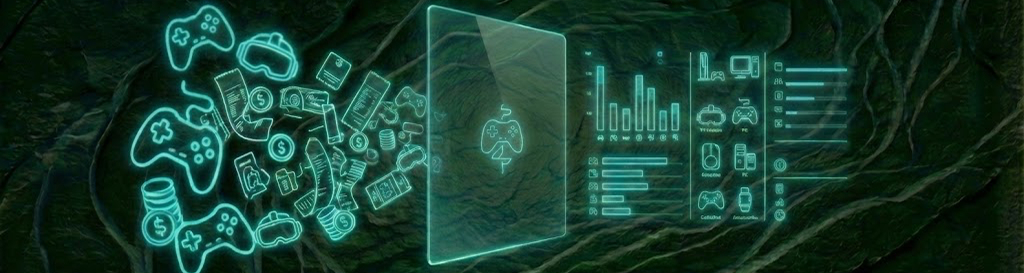
The gaming market is growing alongside digital purchases, but the financial side for most players remains fragmented and poorly managed.
Today, gaming spending is fragmented:
- donations and subscriptions go through different platforms and services
- purchase history is scattered across stores instead of being collected in one place
- limits and controls are often missing or inconvenient
- users realize overspending too late
My Games makes the gaming category “smart”: visibility, control, and predictability, like a mature financial product.
Tip
When a bank becomes a place where it is convenient not only to pay, but also to understand digital spending, the user stops perceiving the banking app as a “30-second utility”.
Problems it solves
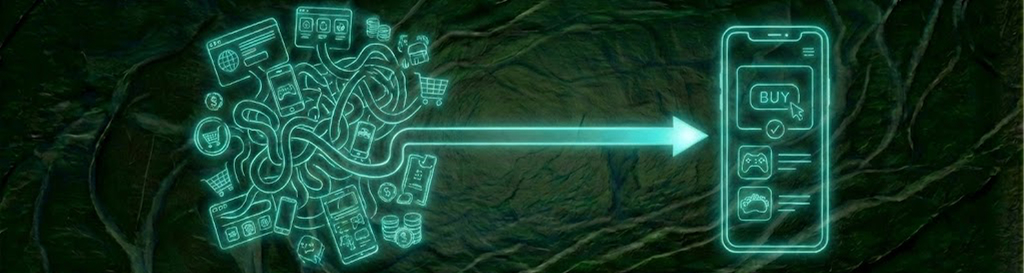
The module reduces fragmentation, improves the UX of digital purchases, and increases security in one of the most fraud-prone categories.
-
Fragmentation
Games, subscriptions, donation services, and digital asset accounting usually exist separately. Here, they are brought together in one place. -
Poor spending manageability
A dedicated gaming contour appears, with limits and rules that reduce budget chaos. -
Complex UX
Purchases and subscription management become fast instead of being spread across multiple interfaces. -
Fraud risk
Gaming purchases and accounts are often targets of attacks. Banking-grade risk mechanisms, confirmations, and audit logs provide a fundamentally different level of protection.
Warning
In gaming, it is easy to “burn trust” with a single mistake. That is why the product is built around security, transparency, and partner-based legal scenarios.

How it works: the user journey
The user connects games and manages them as a financial product: spending, purchases, subscriptions, and account data are collected in one place.
Interface logic:
- the main My Games dashboard: favorite games, spending for the period, budget, statuses
- connecting a game via approved integrations and partner channels
- game profile: balances (if available), inventory (if available), purchase history, control settings
- quick actions: “top up gaming budget”, “buy currency”, “manage subscription”, “set limits”
Example
The user sees that the “monthly gaming budget” is almost exhausted and makes a decision in advance, instead of facing a surprise after the fact.

Purchases and donations directly from the bank
Purchases are built as a familiar payment flow: fast, predictable, with a clear history and risk controls.
Scenarios:
- purchasing in-game currency and items via partners
- payment in fiat or from a linked crypto account with conversion at the time of payment
- transaction history: category, game, status, confirmation
A key principle:
- at the card level, no extra steps or “are you sure you want to pay” prompts are added
- instead, bank-grade risk logic is applied: limits, warnings, protection against impulsive purchase streaks
Note
Speed is preserved, while security is ensured by rules and anti-fraud mechanisms rather than additional confirmation windows.

Gaming budget and spend control
This is the most mass-market and useful layer: a dedicated spending contour for games that provides predictability and reduces impulsive decisions.
Control features:
- a separate “pocket” or budget for games
- limits: daily, monthly, per single transaction
- rules: scheduled top-ups, a percentage of incoming funds, or “round-up” rules
- anti-impulse mechanisms: cooldown after a series of purchases, warnings when exceeding the usual spending pace
Tip
A budget turns gaming from an emotional category into a manageable one. This reduces churn and increases trust in the application, especially for users who are used to chaotic spending.

Game assets as a portfolio
If data access is available and permitted for a game, the user sees inventory and the valuation of digital assets as a clear portfolio, without illusions or promises.
Capabilities:
- display of inventory and item statuses (tradable, restricted, non-transferable)
- value estimation shown as a range (low - fair - high)
- indication of the valuation source and the confidence level of the price
Transparency principle:
- this is not a “price promise”, but an estimate and a reference point
- the user always sees where the price comes from and when it was last updated
Warning
Any price metrics are shown as indicative and depend on the market, liquidity, and the rules of the specific platform.

Deals and trading
Trading is possible only in legal and partner-based scenarios: without gray schemes, with dispute protection and transparent statuses.
Approach:
- deals are executed through partner marketplaces or permitted channels
- in the DARCA interface this appears as a clear operation with a status
- enhanced confirmations and restrictions apply to high amounts and suspicious scenarios
Limitations:
- access to deals and advanced operations is available only after KYC
- regional conditions depend on partners and legal requirements
Note
In this area, the quality of protection and trust matters more than the number of available markets. A strong reputation is more important than rapid scale.

Security and fraud reduction
Gaming is a high-risk area: account compromises, payment fraud, impulsive purchases. The module is built on banking-grade control mechanisms.
Protection layer:
- control of operation frequency and suspicious sequences
- user-level limits and rules
- risk profiling and step-up confirmations for non-standard scenarios
- action logs and clear explanations for applied restrictions
Integration with the module Enhanced Security:
- strengthened confirmations for high-value actions
- risk-based holds, if enabled by the user
- additional login factors and account protection
Danger
A security mistake here damages trust more than in standard categories. That is why “My Games” is designed as a banking product, not a widget.

Availability and regional restrictions
The module’s functions are unlocked based on access level and region: basic scenarios are widely available, while advanced ones require KYC and compliance with applicable rules.
- basic features: dashboard, budgets, analytics, spending controls
- advanced features: purchases, deals, extended limits, and additional benefits
Question
Which parts of the module should be available without KYC as an “audience entry point”, and which should always require strict KYC due to risks and partner requirements?

Connection with the DARCA ecosystem
The module strengthens the Core and other modules: it creates regularity, transparency, and new scenarios without complicating the core user experience.
- Core: accounts, cards, exchange, history, documents, and limits
- Subscriptions: extended limits, additional control features, and analytics
- Saving and Habit Tracker: budget rules and spending discipline for games
- Enhanced Security: strengthened confirmations and protection against compromises
Tip
“My Games” brings DARCA closer to users’ daily habits: regular purchases, subscriptions, and spending control create natural touchpoints without pressure.

How the module supports growth
My Games is an entry point to a massive audience and a source of regularity: purchases repeat, budgets are cyclical, and digital assets keep attention.
Growth and monetization are formed from several sources:
- user acquisition through a clear and mass-market scenario of “gaming purchases + control”
- retention through a regular cycle of spending, subscriptions, and seasonal events
- partner commissions from purchases and storefronts
- subscriptions as access to more advanced control modes and additional benefits
Note
The core bet of the module is not to become the “largest item marketplace”, but to become the most convenient and secure financial place for gamers.