Cold Vault
Info
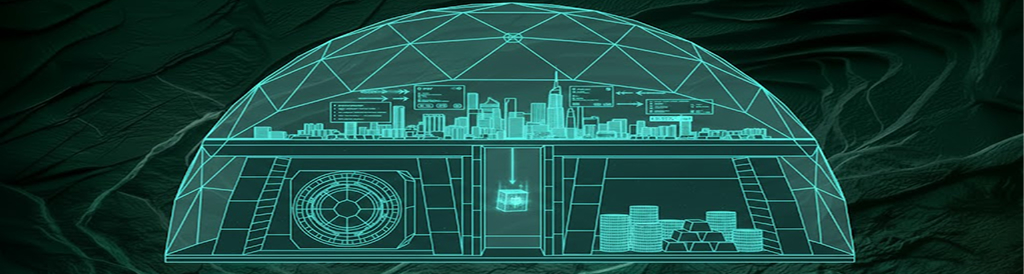
Cold Vault is a separate storage layer inside DARCA: the core remains fast and convenient, while maximum protection is enabled only where it is truly needed.

What Cold Vault is in DARCA
Cold Vault is a module that creates a separate place to store funds with stronger confirmations, without affecting the speed and UX of the core.
In DARCA, Cold Vault is not a “mode for the entire app” and not “mandatory complexity”. It is a separate module where the user personally chooses:
- which assets to store in the vault
- which amounts to keep under maximum protection
- which actions should be considered critical (within the available policies)
The core, meanwhile, works the way a banking app should: fast, predictable, without unnecessary confirmations for every action.
Note
The principle of the module is simple: the vault does not interfere with the core. It is enabled only at the user’s request and according to security rules.

Two wallets in one app
DARCA separates everyday operations and savings: a fast layer for daily life and a protected layer for storage.
Most solutions on the market force a choice: either convenience or maximum security. We do it differently - in one application:
- Core Accounts (core) - fast daily operations
- Cold Vault (vault) - storage and rare critical actions
                 ┌───────────────────────────┐
                 │         DARCA             │
                 │  unified interface, reports │
                 └─────────────┬─────────────┘
                               │
        ┌──────────────────────┴──────────────────────┐
        │                                             │
┌───────┴────────┐                           ┌────────┴───────┐
│ Core Accounts  │                           │   Cold Vault     │
│ fast and simple│                           │maximum protection│
└───────┬────────┘                           └────────┬───────┘
        │                                             │
        └─────────────── Asset movement ──────────────┘
                 (by rules and confirmations)
This gives the user control: spending is convenient, storing is calm, and asset allocation is configured according to a personal risk profile.
Tip
The psychology is simple: a person stops being “afraid to keep money in the app” because they can keep the main portion in the vault without losing the convenience of everyday operations.

How the module solves the fragmentation problem
Cold Vault removes the need to maintain two wallets: one for fast transactions and another for secure storage.
Fragmentation in the market usually looks like this:
- one wallet for fast transactions
- a second wallet for secure storage
- constant transfers between them, confusion around networks, addresses, fees and statuses
In DARCA, this becomes one product with two layers:
- a unified event history
- unified reports and documents
- unified support focused on actions, not just explanations
- fewer “manual hops” and fewer user errors
Warning
The more often a user moves funds between different applications, the higher the risk of mistakes and the easier it becomes for fraud scenarios to succeed. An integrated vault reduces the number of such transitions.

How asset movement works between the core and the vault
Moving assets into the vault and back is done through simple actions, but confirmed by strict rules to prevent theft and accidental operations.
We separate operations by intent:
- in the core - fast operations and everyday liquidity
- in the vault - storage and actions where security matters more than speed
Movement logic:
- “Move into the vault” - quick, but with clear confirmation and logging
- “Return to the core” - strengthened confirmations and risk policies (especially for large amounts)
The module runs a Policy Engine:
- limits and thresholds
- confirmation requirements
- rules for critical actions (changing credentials, adding a device, recovery)
- regional availability of functions, if applicable
Example
Everyday scenario: the user keeps an “operational balance” in the core, and savings in the Cold Vault. When needed, they transfer part of the funds back into the core, confirming it through an enhanced procedure.

How asset movement works between the core and the vault
Moving assets into the vault and back is done through simple actions, but confirmed by strict rules to prevent theft and accidental operations.
We separate operations by intent:
- in the core - fast operations and everyday liquidity
- in the vault - storage and actions where security matters more than speed
Movement logic:
- “Move into the vault” - quick, but with clear confirmation and logging
- “Return to the core” - strengthened confirmations and risk policies (especially for large amounts)
The module runs a Policy Engine:
- limits and thresholds
- confirmation requirements
- rules for critical actions (changing credentials, adding a device, recovery)
- regional availability of functions, if applicable
Example
Everyday scenario: the user keeps an “operational balance” in the core, and savings in the Cold Vault. When needed, they transfer part of the funds back into the core, confirming it through an enhanced procedure.

How Cold Vault interacts with the ecosystem modules
Cold Vault does not duplicate modules and does not slow down the core - it adds a “trust layer” for large balances and critical actions across the entire ecosystem.
Cold Vault works as a separate place for storing funds, so it does not interfere with the core’s everyday operations. But it strengthens modules where the highest risk usually appears: large amounts, withdrawals, management rights, signatures, and accountability.
Note
Integration principle: the module does not “pull” all functionality into itself - it adds a security policy and a physical factor at critical stages.
P2P
- Cold Vault can be used as a “liquidity vault”: keep part of the assets under maximum protection, and move to P2P only what is needed for trading.
- For large operations and for withdrawing the outcome of a deal, enhanced confirmations may be triggered (within risk policies).
- This reduces the risk of losing funds due to phone compromise or mistakes during fast actions.
Tip
The practice is simple: trade from the core, keep the main balance in the Cold Vault. This preserves speed and reduces risk.
Token Creation
- Cold Vault protects issuer rights: issuance, parameter changes, administrative actions, and critical settings may require confirmation through a physical factor.
- For token creators, this means: project management can remain fast, but the “keys of authority” are protected not only by a password and a phone.
- If a token is withdrawn to an external wallet, Cold Vault can serve as a secure perimeter for storing the issuer’s keys and signing operations.
Warning
The most dangerous scenario for an issuer is losing control rights. Cold Vault exists so such actions cannot be confirmed in one click on a compromised device.
RWA
- Cold Vault strengthens RWA at the level of trust and provability: documents, signatures, confirmations, and critical operations go through a stricter perimeter.
- RWA tokens can be stored either in the core (if liquidity is needed) or in the vault (if the priority is security and a long-term horizon).
- This is especially important for RWA because the cost of mistakes is higher, and transparency and accountability requirements are stricter.
Info
For RWA, Cold Vault is not “extra protection” - it is the normal trust infrastructure: signatures, documents and access control within one perimeter.
Staking and liquid staking
- Staking can be enabled from the core, preserving convenience.
- Cold Vault is used to protect large balances and critical actions: strategy changes, withdrawals, route switching, and operation permissions.
- For liquid staking tokens, the logic is the same: high liquidity can stay in the core, while long-term storage and risk control belong in the vault.
Example
The user keeps a “working” volume for operations in the core, while large sums and decisions that must not be confirmed by mistake are handled through the Cold Vault.

Support for existing market cold wallets
DARCA supports popular devices so the user can get maximum security immediately, without waiting for our own hardware.
Cold Vault can work with external cold wallets in two modes:
-
External Vault
- DARCA displays the portfolio (watch-only)
- on-chain transactions are signed on the device
- keys remain with the user
-
External Signer
- the device acts as a confirmation factor for critical actions under security rules
- enabled selectively and does not break the core UX
This allows the user to keep an “ultra-vault” inside one ecosystem, while DARCA gains trust without waiting to manufacture its own hardware.
Question
Why is support for external devices important?
Because it turns Cold Vault into a module that brings trust and large balances from day one, without waiting for a hardware product line.

Ledger, Trezor, Tangem - what they are and how we use them
We support different classes of devices: with a screen for verifying details and without a screen, so security policies adapt to the wallet type.
The key difference between devices:
-
Ledger
- action confirmation happens on the device, with a built-in screen
- strong protection against “address substitution” through visual verification
-
Trezor
- confirmation on the device, with a screen
- well suited for the strict “show and sign” scenario
-
Tangem
- an NFC card, a convenient form factor for mass adoption
- typically without a screen, so it requires stricter previews inside DARCA and tougher threshold policies
What the integration provides:
- the user sees the “vault” portfolio inside DARCA
- transactions are signed on the device (when they are on-chain)
- a physical factor is enabled for critical actions
Note
Important: an external cold wallet is primarily used where there is a specific on-chain transaction. For fast internal core operations, a different logic and risk-policy contour applies.

What this gives DARCA: growth, trust and monetization
Cold Vault increases trust and retention, reduces losses from fraud, and creates a monetization layer through policies, subscriptions and corporate scenarios.
Cold Vault strengthens DARCA across several key dimensions:
- growth of AUM and retention: assets remain inside the ecosystem
- reduced losses: fewer phishing, SIM-swap and social engineering scenarios
- stronger modules: RWA, documents, large transfers, corporate use cases
- market trust: “fast core + optional vault” as a clear and understandable model
Monetization is built honestly:
- baseline security does not become a paid barrier
- subscriptions and packages expand policies, limits, reporting, and corporate modes
- corporate scenarios add a dedicated B2B layer
Tip
A strong product formula: the user does not choose between “convenient” and “secure”. They choose the distribution between two contours inside one bank.

DARCA proprietary devices
We are designing our own device lineup as the next stage of security evolution, but at this stage these are internal concepts under development.
DARCA is developing concepts for its own hardware lineup:
- wearable form factors: card, ring, bracelet, sticker, key fob
- extended devices: Secure Flash and Mini Tablet
Their purpose is to deliver the most seamless experience inside the ecosystem:
- a physical confirmation factor
- signing crypto operations and documents
- content protection and corporate scenarios
- “bank card mode” as part of everyday usage (where available)
It is important to set expectations clearly:
- this lineup is in internal development
- the timeline for market release is estimated as no earlier than 5 years
Warning
The near-term strategy: compatibility with existing cold wallets + a strong Cold Vault architecture. DARCA hardware develops in parallel as the next technological leap.
Final module formula
Cold Vault gives the user a choice: fast operations in the core and maximum protection in the vault, while preserving a single interface, reports, and support.
Cold Vault in DARCA is built around a clear logic:
- the core remains fast and convenient
- the vault provides maximum protection without complicating everyday usage
- the market stops being fragmented: there is no longer a need to keep two wallets and live in constant transfers between them
Info
This is a module that simultaneously increases user trust and scales the ecosystem’s economy: more assets inside DARCA, fewer risks, and more scenarios for growth.